Why Accessibility in Guest Houses Matters for 20% UK Travelers

Updated: Apr 22
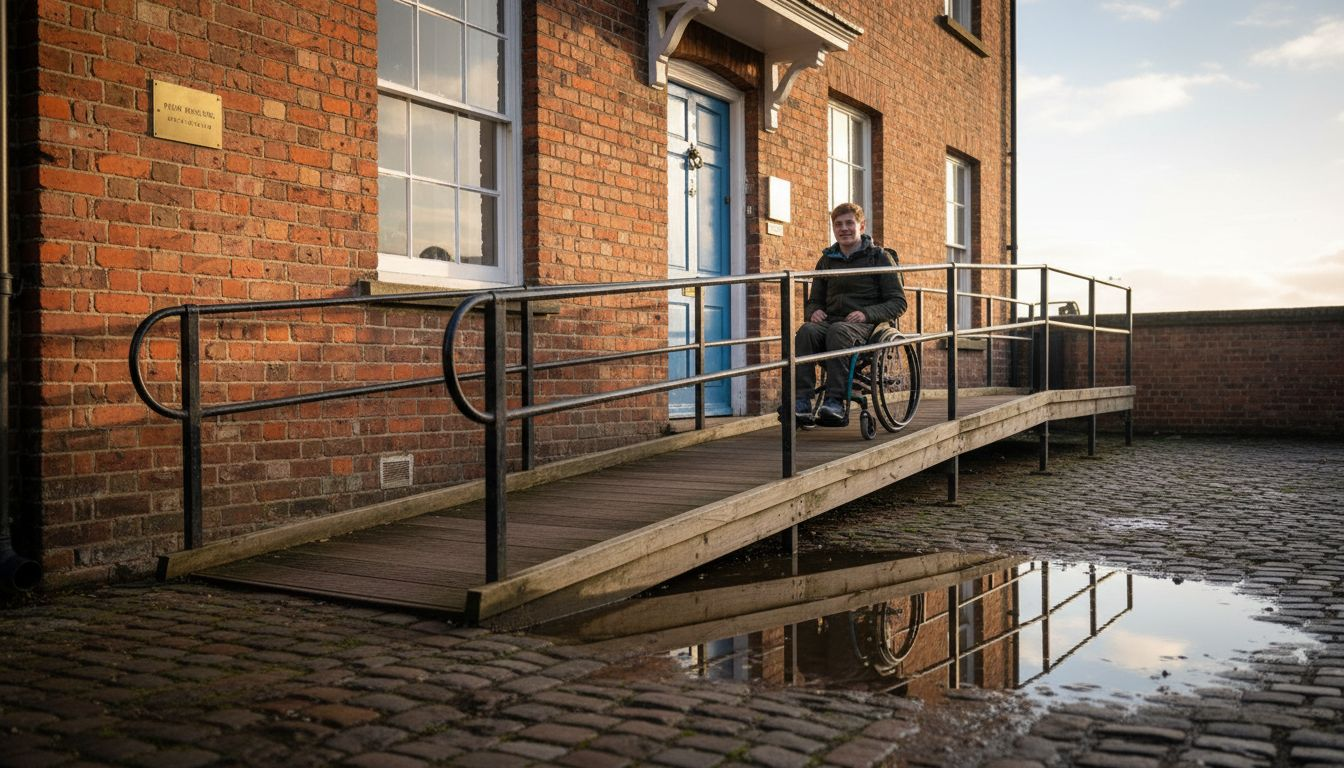
Over 20% of the UK population lives with a disability, yet many guest houses lack basic accessibility features. This creates uncertainty and exclusion for travelers seeking comfortable, safe accommodation. This guide helps you understand accessibility requirements, identify truly inclusive guest houses in Elgin, and book with confidence for a welcoming stay.
Table of Contents
Key Takeaways
Point | Details |
Accessibility is comprehensive | Physical features, clear information, and trained staff support diverse needs beyond mobility alone. |
UK law mandates adjustments | The Equality Act 2010 requires guest houses to provide reasonable accessibility accommodations. |
Common barriers persist | Many guest houses lack step-free access and provide unclear accessibility information online. |
Misconceptions limit progress | Cost-effective accessibility improvements benefit all guests, not just wheelchair users. |
Research empowers booking | Direct communication and reviews from similar travelers increase booking confidence significantly. |
Understanding Accessibility in Guest Houses
Accessibility means providing equal access to facilities, information, and services for people with a wide range of disabilities. Many travelers assume accessibility only addresses wheelchair users, but inclusive design benefits people with sensory impairments, cognitive differences, and temporary conditions like broken limbs.
The Equality Act 2010 legally requires establishments in the UK, including guest houses, to make reasonable adjustments for disabled customers. These adjustments cover three critical areas:
Physical features like ramps, accessible bathrooms, and wider doorways
Communication methods including clear signage, accessible websites, and booking information
Staff support through disability awareness training and emergency assistance procedures
Understanding your legal rights helps you recognize what to expect from guest house amenities and feel confident advocating for appropriate accommodations. Guest houses cannot legally refuse service based on disability and must work with you to provide suitable adjustments.
The scope of accessibility extends beyond visible disabilities. Hearing loops for guests with hearing impairments, allergen information for those with food sensitivities, and quiet rooms for travelers with sensory processing needs all constitute accessibility features. This broader understanding helps you assess whether a guest house truly serves diverse travelers.
Why Accessibility Impacts Traveler Comfort and Safety
Physical barriers like steps, narrow doorways, and inaccessible bathrooms create immediate discomfort and pose genuine safety risks. A guest house with steep stairs and no handrails endangers travelers with mobility limitations, while cramped bathroom spaces prevent safe transfers for wheelchair users.
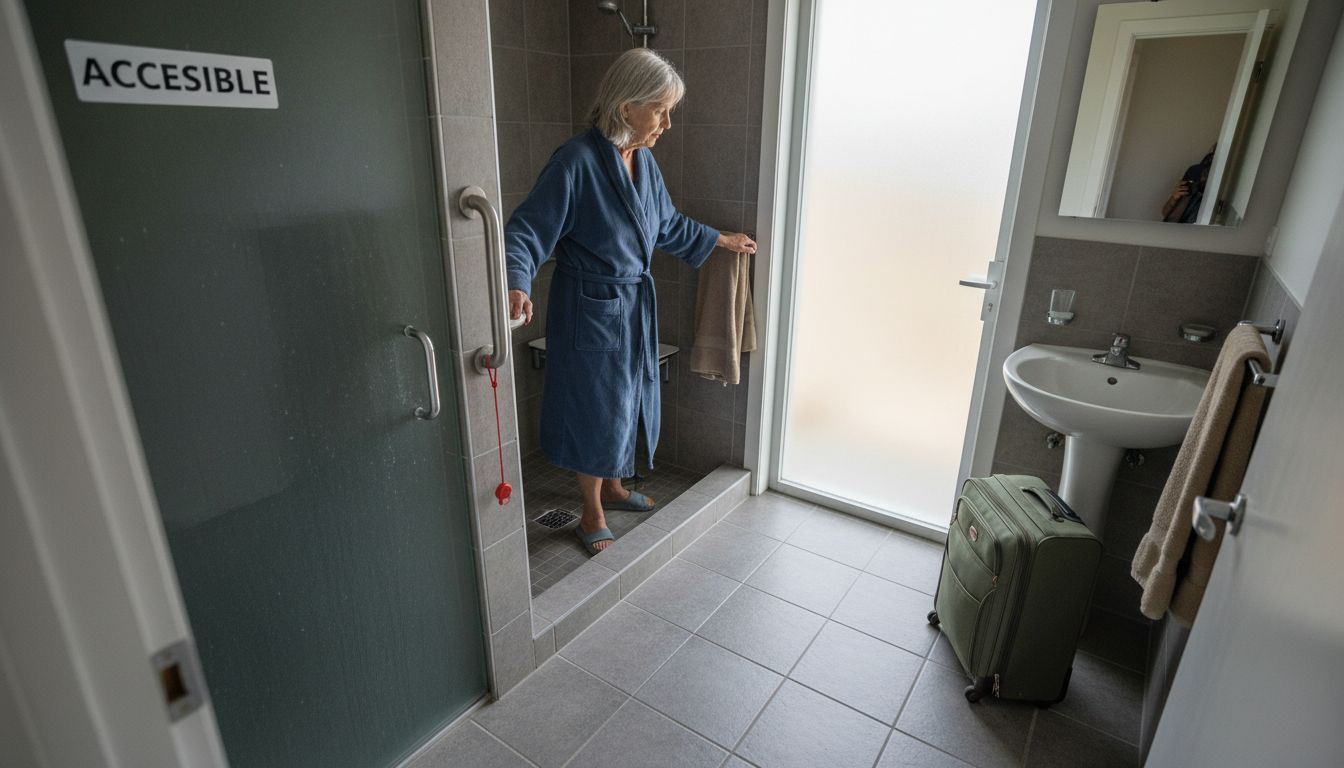
Clear signage and detailed accessibility information reduce anxiety and support independence throughout your stay. When you know where accessible entrances, lifts, and emergency exits are located before arrival, you can navigate confidently without constant staff assistance.
Guest surveys reveal 40% increased booking confidence when clear accessibility information is provided online. This statistic demonstrates how transparency directly influences your willingness to commit to accommodation. Without detailed descriptions and photos, you face uncertainty about whether the guest house genuinely meets your needs.
Well-trained staff who understand diverse accessibility requirements contribute significantly to safe, supportive stays. Staff awareness prevents awkward situations, ensures emergency procedures accommodate all guests, and creates a welcoming environment where you feel respected.
Key comfort and safety factors include:
Step-free or ramped access to entrances and common areas
Accessible bathroom facilities with grab rails and emergency cords
Clear evacuation procedures and accessible emergency exits
Staff trained to communicate effectively with guests who have sensory or cognitive differences
Pro tip: Always ask if staff have completed disability awareness training. This simple question reveals how seriously a guest house takes accessibility and whether they can properly support your needs throughout your stay. For more insights on guest experiences, visit the Stag & Barrel blog.
Consider how privacy considerations in guest houses intersect with accessibility. Accessible rooms should maintain the same privacy standards as standard rooms, with proper soundproofing and secure locks adapted for diverse abilities.
Common Misconceptions About Accessibility in Guest Houses
Three persistent myths prevent guest houses from implementing proper accessibility and create false expectations for travelers:
Accessibility is only for wheelchair users. Accessibility serves people with hearing impairments who need visual alerts, travelers with autism who require quiet spaces, guests with chronic pain who need ground-floor rooms, and many others. Focusing solely on wheelchair access ignores the majority of disabled travelers.
Accessibility improvements are prohibitively expensive. Many effective adjustments cost little or nothing. Adding detailed accessibility information to websites is free. Installing grab rails costs under £100. Providing large-print menus requires only a printer. While some modifications like lifts are costly, numerous low-cost changes create meaningful accessibility.
Accessible accommodations offer fewer amenities. Thoughtful accessibility design enhances overall guest satisfaction for everyone. Wide doorways benefit guests with luggage. Clear signage helps all travelers navigate easily. Accessible bathrooms with non-slip surfaces improve safety universally.
Understanding these misconceptions helps you recognize genuinely accessible guest houses versus those making superficial claims. A guest house that believes accessibility only means wheelchair ramps likely overlooks sensory, cognitive, and service accessibility.
These myths also explain why many travelers with disabilities encounter disappointing stays. Guest houses operating under these misconceptions implement incomplete accessibility, leaving guests without crucial accommodations they expected based on advertised features.
Framework to Evaluate Accessibility in Guest Houses
Use this structured comparison to assess guest houses effectively before booking:
Accessibility Category | Essential Features | Questions to Ask |
Physical Access | Step-free entrance, ramps, accessible bathroom with grab rails, wider doorways | Are there steps at the entrance? What are doorway widths? Is there an accessible bathroom on the ground floor? |
Information Access | Detailed online descriptions, photos of accessibility features, clear booking communication | Can I see photos of accessible rooms and bathrooms? Is accessibility information specific or vague? |
Service Access | Staff disability awareness training, emergency assistance capability, flexible check-in | Has your staff completed disability training? How do you assist guests during emergencies? |
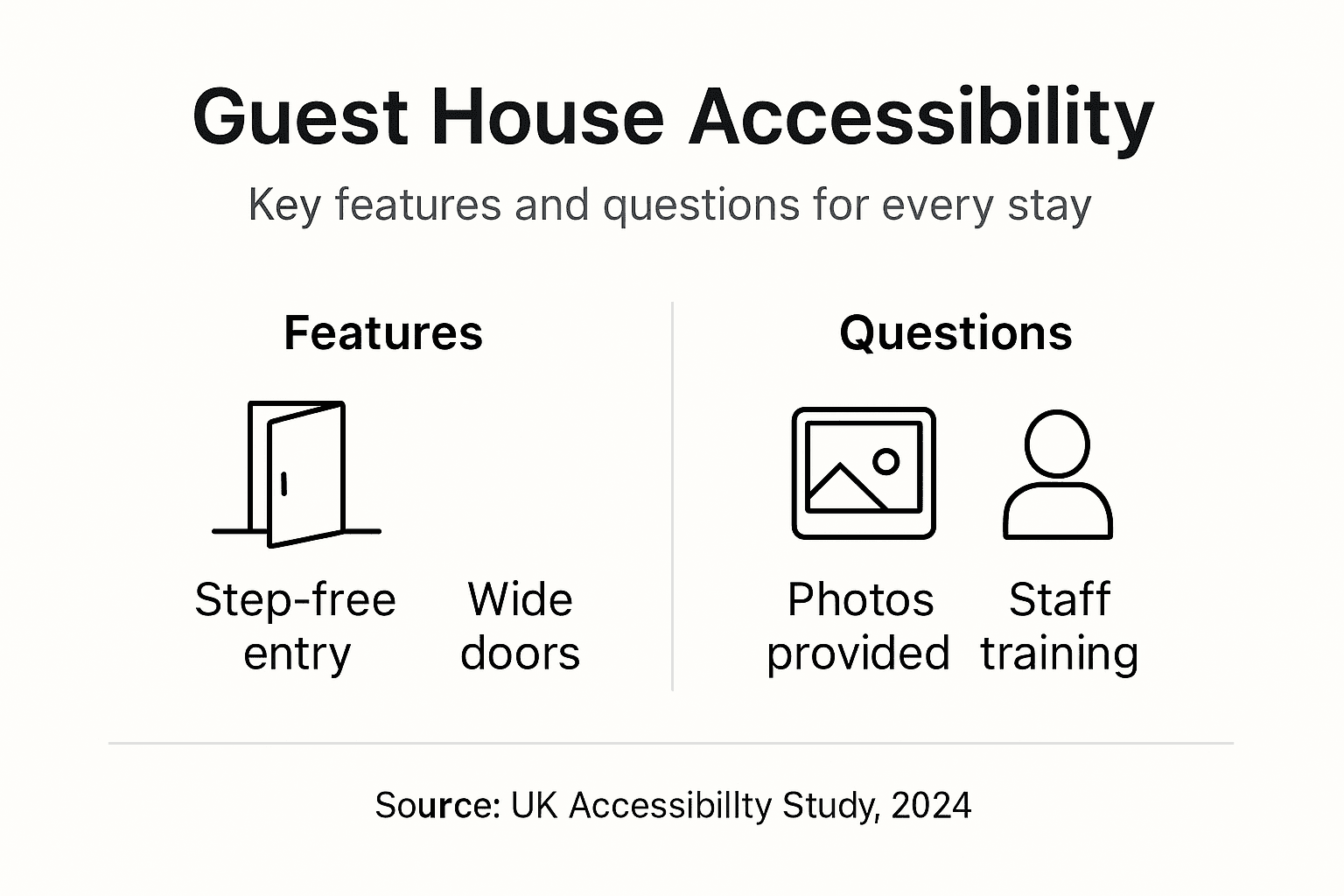
Physical features form the foundation but information and service accessibility determine whether you can confidently book and enjoy your stay. A guest house with excellent physical access but poorly trained staff still creates barriers.
Key physical features to verify:
Level or ramped access from parking to entrance and throughout the property
Accessible bathrooms with roll-in showers, raised toilet seats, and grab rails
Adequate maneuvering space in rooms and hallways
Visual and audible alarm systems for emergencies
Pro tip: When booking, ask specific questions about these elements rather than general “Is your guest house accessible?” queries. Request doorway measurements, bathroom layout details, and staff training documentation. Specific questions reveal how thoroughly a guest house understands accessibility. Review comprehensive guest house amenities to understand what features support comfortable stays.
Practical Guide: Finding and Choosing Accessible Guest Houses in Elgin
Follow these actionable steps to identify genuinely accessible accommodation:
Research guest houses with detailed accessibility information online. Look for properties that provide specific measurements, multiple photos of accessible features, and clear descriptions of available adjustments. Vague statements like “accessible rooms available” signal incomplete accessibility.
Contact guest houses directly with specific questions. Email or call to ask about doorway widths, bathroom configurations, staff training, and any concerns specific to your needs. Properties that respond thoroughly and knowledgeably demonstrate genuine commitment to accessibility.
Check guest reviews from people with similar accessibility needs. Reviews from travelers with disabilities provide invaluable insights about whether advertised features function as promised and how staff handle accessibility requests.
Verify booking flexibility and cancellation policies. Accessible accommodations should offer flexible booking in case accessibility features don’t meet your needs upon arrival.
Red flags to watch for:
No accessibility information provided on the website or booking platforms
Staff unable to answer specific accessibility questions
Reluctance to provide photos or detailed descriptions of accessible features
Reviews mentioning unexpected barriers or unhelpful staff responses to accessibility needs
Apply these steps when exploring options through resources like the guest house booking guide. Understanding how to secure booking online becomes easier when you know exactly what accessibility information to seek.
Trust your instincts during this process. If a guest house seems evasive or dismissive about accessibility questions, look elsewhere. Genuine accessible properties welcome detailed questions and provide comprehensive answers.
Benefits of Accessible Guest Houses for Everyone
Accessibility creates advantages that extend far beyond serving disabled travelers:
Increased bookings and loyal customer base. The disabled travel market represents over £2 billion in annual UK spending. Accessible guest houses tap into this substantial, underserved market while building loyalty through reliable, welcoming service.
Enhanced reputation and social responsibility. Properties demonstrating genuine accessibility commitment attract positive reviews, media attention, and recognition as inclusive businesses. This reputation appeals to all travelers who value social responsibility.
Better experience for all guests. Wide doorways help guests with luggage and families with prams. Clear signage reduces confusion for everyone. Well-lit spaces and non-slip surfaces improve safety universally. Accessibility improvements elevate the entire guest experience.
Reduced exclusion and increased dignity. Accessible guest houses allow disabled travelers to enjoy holidays with family and friends, attend business events, and explore new destinations with independence and dignity.
These benefits explain why forward-thinking guest houses prioritize accessibility as a business strategy, not merely a legal obligation. The return on investment comes through expanded customer reach, improved satisfaction scores, and differentiation in a competitive market.
For business travelers with disabilities, accessible guest houses with appropriate business facilities enable productive work trips without accessibility barriers compromising professional activities.
Discover Accessible Guest Houses at Stag & Barrel in Elgin
Finding truly accessible accommodation in Elgin becomes simpler when you choose a guest house committed to inclusive hospitality. Stag & Barrel offers well-equipped accessible rooms designed for comfort and independence, with trained staff who understand diverse accessibility requirements.
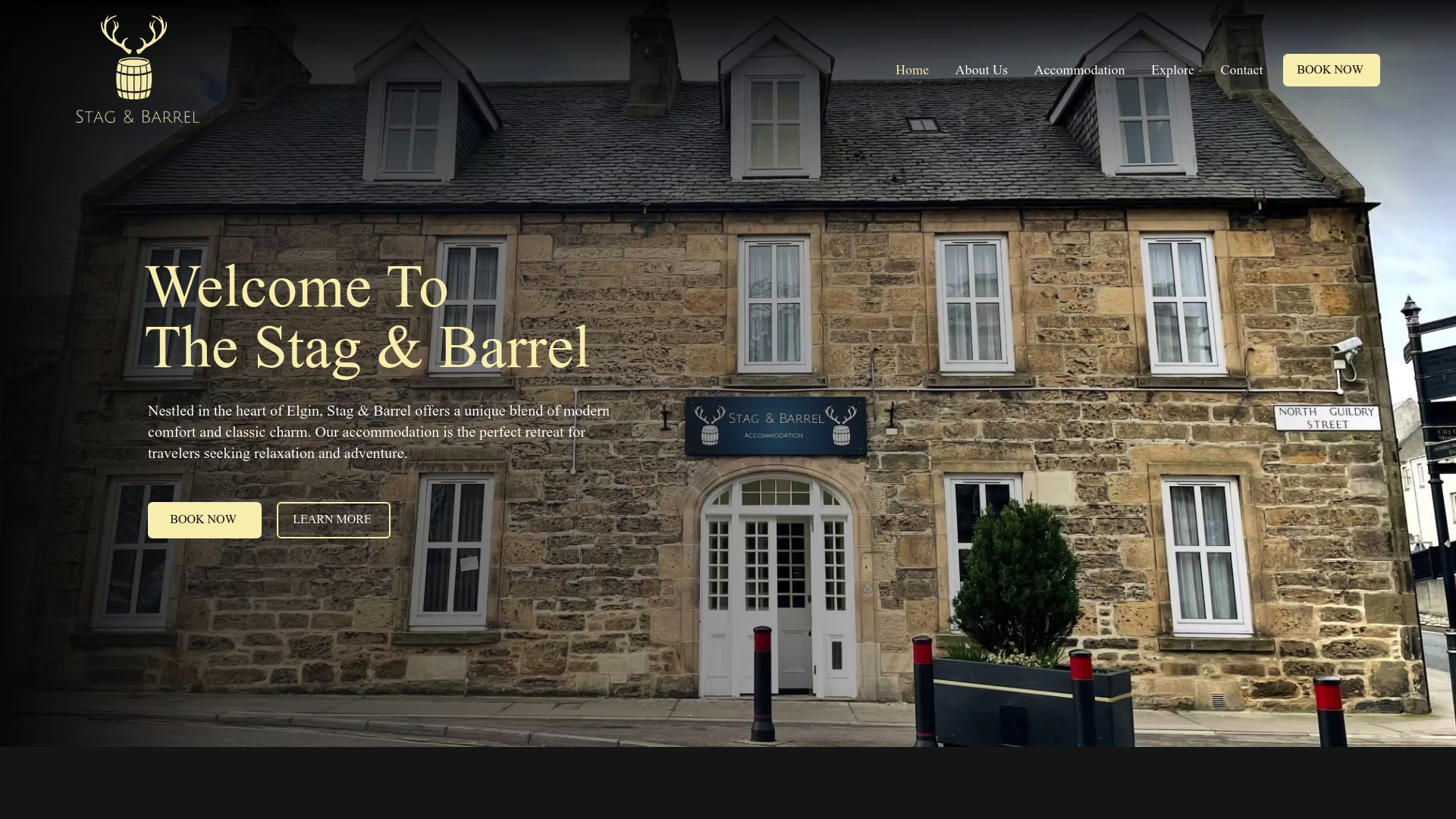
Our detailed accessibility information helps you book with confidence, knowing exactly what features and support await your arrival. From step-free access to accessible bathrooms and clear emergency procedures, we prioritize your safety and comfort throughout your stay.
Explore our accommodation options to view specific accessibility features, room layouts, and amenities. Whether you’re visiting for business or leisure, our business-friendly accommodation in Elgin provides the accessible facilities you need for a successful trip. Review our guest house booking guide for booking tips and contact us directly with any accessibility questions.
Frequently Asked Questions
What physical features should I expect in an accessible guest house?
Accessible guest houses should provide step-free or ramped entrance access, wider doorways (minimum 800mm), and accessible bathrooms with grab rails, roll-in showers, and raised toilet seats. Ground-floor rooms eliminate lift dependency and improve emergency evacuation safety.
How can I verify if a guest house truly meets my accessibility needs?
Ask detailed questions about specific measurements, request photos of accessible features, and read reviews from travelers with similar disabilities. Genuine accessible properties respond thoroughly and welcome detailed inquiries. Vague responses signal incomplete accessibility understanding.
Does accessibility affect the price or quality of guest house stays?
Accessible rooms typically cost the same as standard rooms and often feature enhanced amenities benefiting all guests. Quality accessible accommodation provides equal comfort, privacy, and service while meeting specific accessibility requirements. Budget-friendly accessible options exist throughout Elgin.
Who benefits from accessibility features besides wheelchair users?
People with hearing or vision impairments, chronic pain, autism, temporary injuries, elderly travelers, families with young children, and guests with hidden disabilities all benefit from accessibility features. Inclusive design supports diverse needs beyond visible mobility limitations.
What are common signs a guest house is not genuinely accessible?
Warning signs include missing or vague accessibility information, staff unable to answer specific questions, lack of photos showing accessible features, and reviews mentioning unexpected barriers. Reluctance to provide detailed accessibility descriptions indicates inadequate accommodations. For reliable accessible guest house booking tips, research thoroughly and communicate directly before confirming reservations.
Recommended


Comments