Privacy in Guest Houses – What Travellers Must Know

Updated: May 27

Booking accommodation in Elgin brings excitement, but worries about privacy and security can linger for many travellers. Knowing how guest houses approach privacy standards helps you make informed choices and trust your hosts. This guide highlights how clear policies, professional management, and respect for your personal boundaries work together to create a safe and comfortable stay, ensuring your information and peace of mind are always a priority.
Table of Contents
Key Takeaways
Point | Details |
Understanding Privacy Standards | Guest houses must adhere to privacy standards that encompass physical, data, and surveillance privacy to ensure guest dignity and security. |
Legal Obligations | Property owners are required to implement strong data protection protocols and respect guest privacy rights outlined by applicable legal frameworks. |
Transparency and Consent | It is essential for guest houses to obtain explicit consent before collecting personal information and to provide clear policies on data usage. |
Surveillance Practices | CCTV use must be transparent, with appropriate safeguards in place to protect against misuse and ensure guest comfort and safety. |
Defining Guest House Privacy Standards
Privacy in guest houses represents a complex interplay of personal boundaries, legal requirements, and hospitality practices. Understanding these standards ensures both guests and property owners can create comfortable, secure environments. Global privacy principles provide essential frameworks for managing personal information and maintaining guest dignity.
Guest house privacy standards encompass several critical dimensions:
Physical Privacy: Ensuring private sleeping spaces, secure room locks, and minimal staff intrusion
Personal Data Protection: Safeguarding guest registration information, contact details, and payment records
Communication Confidentiality: Maintaining discretion about guest identities, stays, and personal interactions
Digital Privacy: Securing wireless networks, protecting electronic booking information
Legal frameworks worldwide increasingly recognise privacy as a fundamental right, particularly in hospitality settings. Professional guest houses must implement systematic approaches to protect individual privacy, covering both physical and digital domains. This means developing clear protocols for data handling, staff training, and guest information management.
Privacy isn’t just a legal requirement—it’s the foundation of trust between guests and accommodation providers.
Effective privacy standards require comprehensive strategies that balance guest comfort with necessary operational practices. This involves creating transparent policies, training staff in confidentiality protocols, and establishing clear boundaries for information handling and personal interactions.
Pro tip: Always request explicit consent before collecting or storing any personal guest information, and provide clear mechanisms for guests to understand how their data will be used and protected.
Types of Privacy: Physical, Data, Surveillance
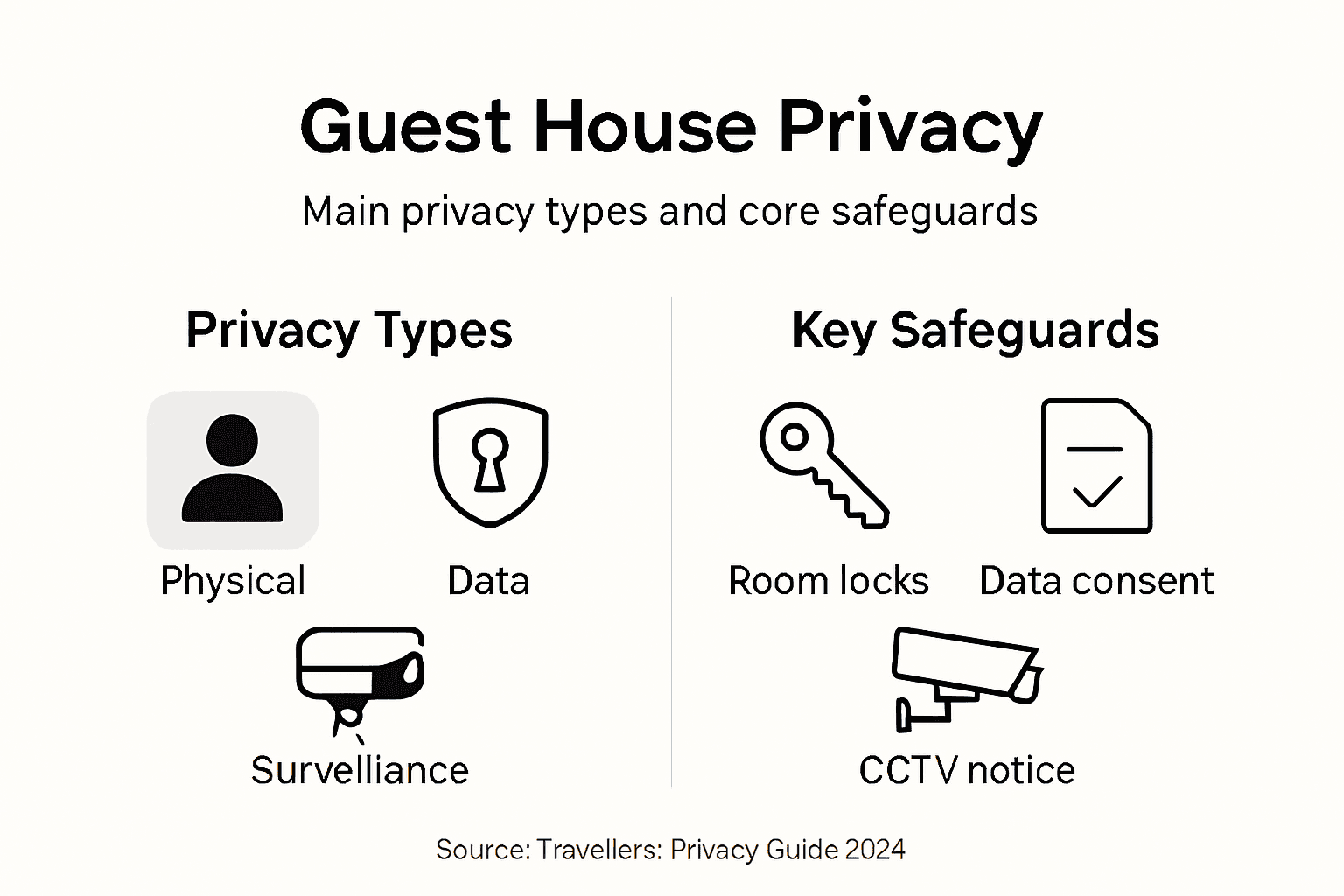
Privacy in guest houses represents a multifaceted concept that extends far beyond simple room security. International privacy standards distinguish between three critical dimensions of privacy protection that travellers must understand: physical, data, and surveillance privacy.
Each privacy type requires distinct protective measures:
Physical Privacy: Protection of personal space and bodily autonomy
Secure room locks
Minimal intrusion from staff
Private changing and bathing areas
Data Privacy: Safeguarding personal information
Secure storage of guest registration details
Protected payment information
Consent-based data collection
Surveillance Privacy: Controlling monitoring technologies
Limited camera usage
Clear disclosure of security systems
Restricted access to recorded footage
Guest houses must implement comprehensive strategies that respect these nuanced privacy boundaries. Digital tracking and personal information management require careful navigation, ensuring guests feel both protected and respected throughout their stay.

Here’s how physical, data, and surveillance privacy measures compare in guest house environments:
Privacy Type | Typical Safeguards | Main Guest Concerns |
Physical Privacy | Room locks, private spaces | Unwanted intrusion, staff access |
Data Privacy | Encryption, access restriction | Data theft, unauthorised sharing |
Surveillance Privacy | CCTV placement, usage disclosure | Hidden monitoring, misuse of footage |
Privacy is not a luxury—it’s a fundamental human right that extends to every aspect of travel accommodation.
Legal frameworks increasingly recognise the complexity of privacy protection. Property owners must develop robust policies that address physical boundaries, digital data protection, and surveillance practices, creating an environment of trust and transparency.
Pro tip: Always request and document explicit guest consent before collecting or storing any personal information, and provide clear, accessible mechanisms explaining how their data will be used and protected.
Privacy Features and Safeguards Explained
Modern guest houses must implement comprehensive cybersecurity and privacy safeguards that protect guests’ personal information and physical boundaries. These protective measures go beyond simple security protocols, creating a holistic approach to maintaining individual privacy and dignity.
Key privacy features in guest house environments include:
Authentication Protections:
Secure digital registration systems
Two-factor guest verification
Limited staff access to personal information
Data Management Safeguards:
Encrypted guest records
Strict data retention policies
Secure payment processing systems
Physical Privacy Technologies:
Smart room locks with unique access codes
Sound-dampening room designs
Privacy indicator systems for housekeeping
Digital protection represents a critical component of modern guest privacy strategies. Sophisticated encryption technologies and carefully designed access management protocols ensure that guests’ personal information remains confidential throughout their stay.
Privacy is not just a technical requirement—it’s a fundamental commitment to guest respect and dignity.
Legal frameworks increasingly mandate comprehensive privacy protections. Guest houses must develop robust, transparent policies that address potential vulnerabilities in both digital and physical privacy domains, demonstrating a proactive approach to guest security.
Pro tip: Request a written privacy policy from your accommodation provider, ensuring they outline exactly how your personal information will be collected, used, and protected during your stay.
Legal Protections for Guest Privacy in Scotland
Scottish legal frameworks provide robust data protection guidelines that specifically safeguard guests’ privacy rights in hospitality settings. These regulations ensure that guest houses maintain stringent standards of personal information protection and respect individual privacy boundaries.
Key legal protections for guests in Scottish guest houses include:
Personal Data Rights:
Right to access personal information collected
Request for data deletion
Consent requirement for data processing
Surveillance Limitations:
Restricted camera placement
Mandatory signage for monitoring areas
Clear guidelines on video recording
Information Security Obligations:
Encrypted digital records
Limited staff access to personal details
Secure data storage protocols
Data protection laws in Scotland mandate that guest houses implement comprehensive privacy measures. These legal requirements go beyond simple compliance, creating a fundamental framework that prioritises guests’ rights to personal confidentiality and dignity.
Scottish privacy legislation ensures that personal information is treated as a fundamental right, not a privilege.
The legal landscape continues to evolve, with increasing emphasis on digital privacy and transparent data handling. Guest houses must proactively adapt to these changing regulations, demonstrating a commitment to protecting guests’ personal information through robust, ethical practices.
Pro tip: Always request a copy of the guest house’s privacy policy and understand your rights to access, modify, or delete your personal information during your stay.
Guest Rights and Owner Obligations
Guest houses operate within a complex legal framework that balances guest privacy rights with owner responsibilities. This delicate relationship requires clear understanding of the legal boundaries that protect both parties’ interests and ensure a safe, respectful accommodation experience.
Guest rights and owner obligations encompass several key dimensions:
Guest Personal Rights:
Right to confidentiality of personal information
Protection from unauthorized data sharing
Ability to request data deletion
Owner Legal Responsibilities:
Implementing robust data protection protocols
Obtaining explicit consent for information processing
Maintaining secure information storage systems
Disclosure Limitations:
Restricted information sharing with third parties
Legal exceptions for law enforcement requests
Transparent communication about data usage
Privacy accountability represents a critical aspect of hospitality management. Guest houses must proactively design systems that respect individual privacy while maintaining necessary operational requirements, creating a trust-based relationship between guests and accommodation providers.
Legal obligations are not merely bureaucratic requirements—they are fundamental protections of human dignity.
The evolving legal landscape demands continuous adaptation from guest house owners. Transparent policies, clear communication, and rigorous privacy protection mechanisms are no longer optional but essential components of responsible hospitality management.
Pro tip: Always request a detailed explanation of how your personal information will be handled, stored, and potentially shared before completing your booking.
Risks, CCTV Misuse and How to Respond
Travellers must be acutely aware of CCTV privacy risks that can compromise personal security in guest accommodation settings. Surveillance technologies, while intended for safety, can potentially become instruments of unwarranted intrusion if not properly regulated and monitored.
Key risks and potential CCTV misuse scenarios include:
Inappropriate Camera Placement:
Cameras in private spaces like bathrooms
Unrestricted views of personal areas
Hidden or undisclosed surveillance equipment
Data Mishandling Risks:
Unauthorized video recording
Potential image distribution
Lack of secure data storage protocols
Psychological Impact:
Constant monitoring leading to discomfort
Violation of personal boundaries
Erosion of sense of privacy and safety
Digital surveillance represents a complex ethical landscape where technological capabilities must be balanced against fundamental human rights. Guest houses must implement transparent policies that clearly communicate surveillance practices and obtain explicit guest consent.
The following table summarises common risks related to CCTV surveillance and practical responses:
CCTV Risk | Potential Effect | Recommended Guest Action |
Cameras in private spaces | Loss of privacy, discomfort | Request camera removal |
Poor data protection | Data leaks, unauthorised access | Ask about security protocols |
Undisclosed surveillance | Trust issues, anxiety | Demand clear disclosure |
Surveillance is a privilege of protection, not a license for invasion of personal privacy.
Legal frameworks increasingly recognise the need for strict guidelines governing surveillance technologies. Guests have the right to understand, challenge, and potentially refuse invasive monitoring practices that compromise their personal dignity and comfort.
Pro tip: Always request detailed information about CCTV placement, ask to see camera locations, and do not hesitate to challenge any surveillance that feels inappropriate or excessively intrusive.
Ensure Your Privacy Stays Protected at Your Next Stay
Privacy challenges in guest houses can leave travellers feeling uneasy about their personal space and data security. With concerns ranging from physical privacy and surveillance misuse to data protection and legal rights, it is vital to choose accommodation that truly respects and safeguards these boundaries. Key terms like physical privacy, data privacy, and surveillance privacy highlight the complex layers that every guest must consider for a worry-free stay.
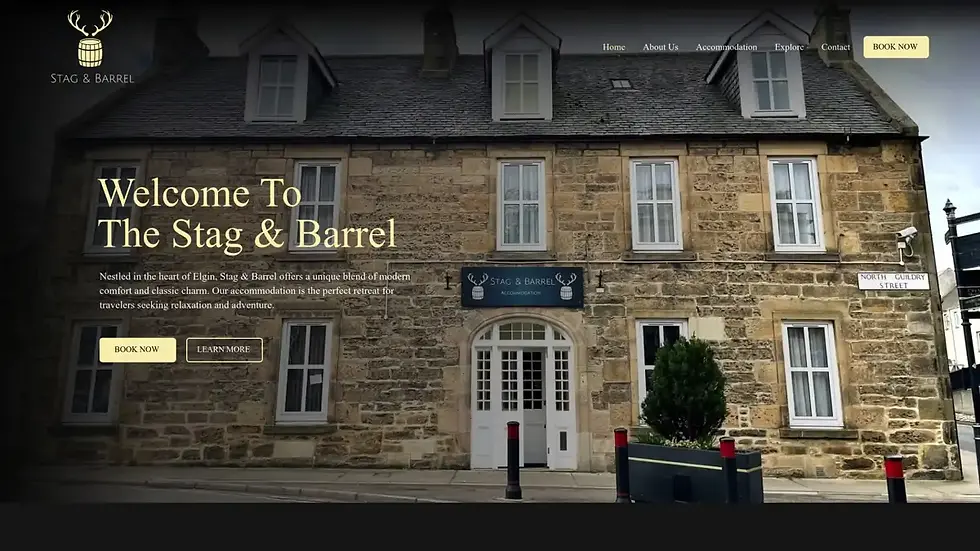
Discover how the Hotel Guest House prioritises your privacy through transparent policies, secure digital systems, and thoughtful physical safeguards. Don’t wait until your comfort is compromised—visit Stag and Barrel now to book a stay where your dignity and personal information are respected and protected at all times. Take control of your travel experience and rest assured knowing your privacy rights are honoured.
Frequently Asked Questions
What privacy standards should I expect in a guest house?
Guests should expect standards that ensure physical privacy through secure room locks, protection of personal data, confidentiality of communications, and digital privacy through secured networks and encrypted booking information.
How can guest houses protect my personal information?
Guest houses can protect your personal information by ensuring secure storage of records, employing encryption technologies, and implementing strict data retention policies to prevent unauthorized access and data breaches.
What rights do I have regarding my personal data in a guest house?
You have the right to access your personal information, request deletion of data, and require consent before your data is processed. Guest houses are obliged to be transparent about how your data is handled.
What should I do if I feel my privacy is being compromised in a guest house?
If you feel your privacy is compromised, you should immediately communicate your concerns to the management, request the removal of any invasive surveillance, and ask for a clear explanation of the privacy policies regarding data collection and monitoring.
Recommended


Comments