Role of Reception in Guest Houses – Enhancing Satisfaction

Updated: May 15

A single interaction at reception can shape how guests remember their time in Elgin guest houses. For managers determined to raise satisfaction, understanding that reception goes far beyond keys and paperwork is essential. Every greeting and conversation is a building block for trust, loyalty, and guest delight. Learn how combining genuine human warmth with efficient service transforms reception into your most valuable guest satisfaction asset.
Table of Contents
Key Takeaways
Point | Details |
Reception is Crucial | The reception area is the first point of contact for guests and plays a vital role in shaping their overall experience. |
Diverse Responsibilities | Reception staff manage a wide range of tasks, from check-in procedures to guest communications, demanding both technical and interpersonal skills. |
Continuous Training is Essential | Ongoing training in both technical and emotional intelligence skills is crucial for reception staff to enhance guest interactions and service quality. |
Legal and Safety Compliance | Maintaining compliance with legal and safety regulations is essential to protect both guests and the business from potential risks. |
Reception in Guest Houses Defined and Debunked
Reception represents the critical first interaction point between guests and hospitality establishments, serving as the strategic hub for managing visitor experiences in guest houses. This initial point of contact goes far beyond merely checking guests in and out, encompassing a complex system of social and economic exchanges.
Research exploring host-guest interactions reveals that reception functions are multifaceted and deeply nuanced. Host-guest interaction dynamics demonstrate that reception staff play a pivotal role in creating positive emotional experiences and setting the tone for a guest’s entire stay.
Key responsibilities of guest house reception staff include:
Managing guest check-in and check-out processes
Providing local area recommendations
Handling guest inquiries and special requests
Coordinating housekeeping and maintenance services
Managing guest communications and expectations
Processing payments and maintaining financial records
Guest house reception represents a sophisticated interface between hospitality service delivery and customer satisfaction. Staff must balance technical efficiency with genuine human warmth, transforming routine transactions into memorable interactions.
Pro tip: Train reception staff to view every guest interaction as an opportunity to create a positive, personalised experience that extends beyond mere transactional service.
Core Responsibilities and Guest Interactions
Guest house reception staff are the critical front-line representatives responsible for creating memorable visitor experiences. Front desk staff roles encompass far more than administrative tasks, serving as hospitality ambassadors who directly shape guests’ perceptions and overall satisfaction.
These professionals manage a complex array of responsibilities that require exceptional interpersonal skills and technical proficiency. Key operational duties include:
Processing guest reservations and check-in/check-out procedures
Managing guest communication and addressing specific requests
Coordinating with housekeeping and maintenance departments
Providing local area recommendations and tourism information
Handling payment transactions and maintaining financial records
Ensuring guest safety and maintaining confidential guest information
Guest interactions represent the most nuanced aspect of reception work. Staff must balance efficiency with genuine warmth, transforming routine transactions into personalised experiences that make guests feel welcomed and valued. Front office interaction protocols emphasise creating a seamless, professional environment that anticipates and exceeds guest expectations.
Successful reception staff understand that each interaction is an opportunity to build rapport, solve potential issues proactively, and represent the guest house’s brand values through their communication and attitude.
Pro tip: Develop a comprehensive training programme that focuses not just on technical skills, but on emotional intelligence and personalised service techniques.
Essential Skills and Technological Tools for Success
Digital literacy has become a cornerstone of modern guest house reception work, transforming traditional hospitality roles into technologically sophisticated positions. Innovative front office technologies are reshaping how guest interactions and operational processes are managed, requiring receptionists to develop a robust blend of technical and interpersonal skills.
Key technological competencies for contemporary guest house reception staff include:
Proficiency in property management systems
Advanced customer relationship management (CRM) software skills
Mobile check-in and reservation platform navigation
Digital communication tool expertise
Basic data analysis and reporting capabilities
Cybersecurity awareness and guest data protection
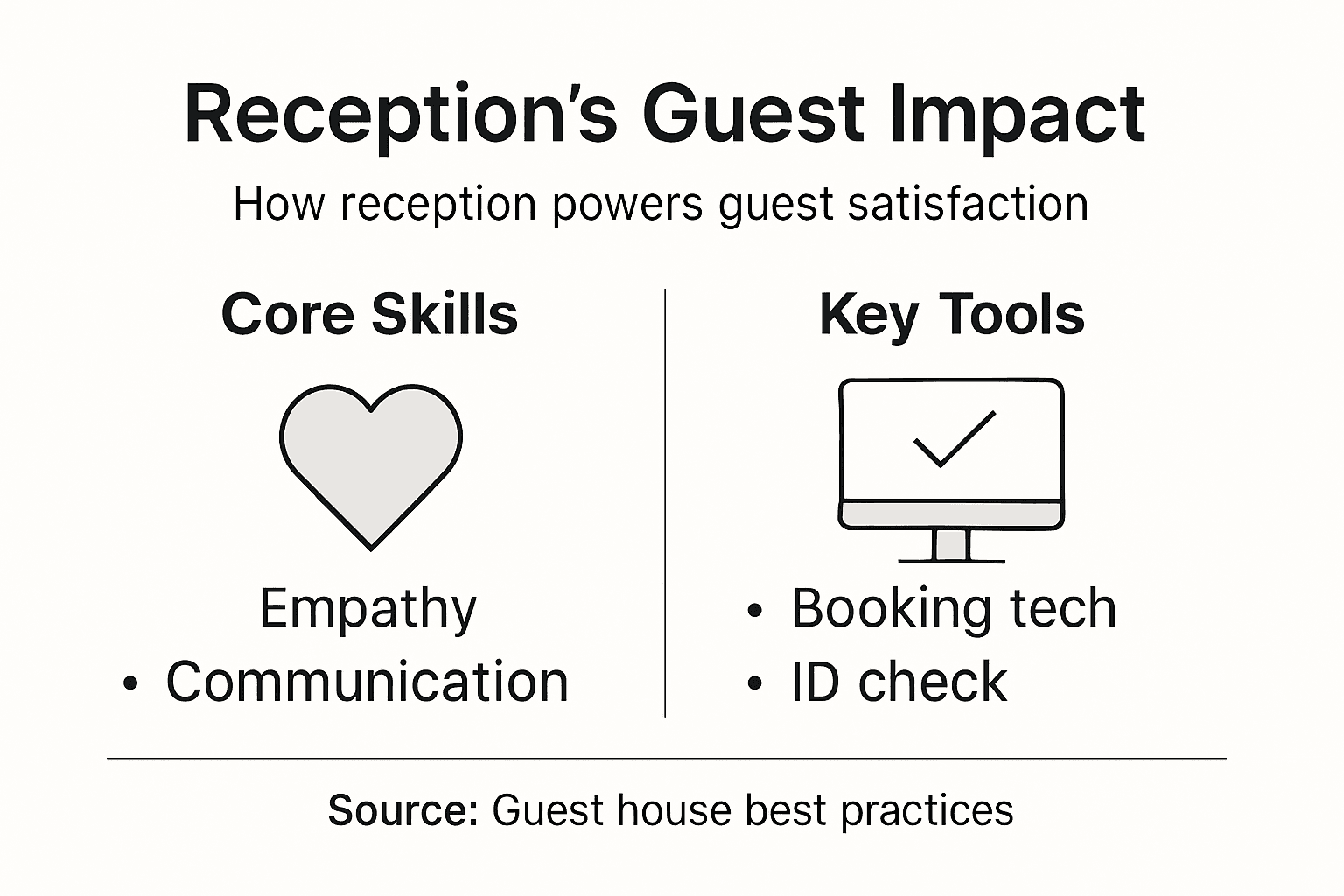
Soft skills remain equally critical alongside technological proficiency. Technology adoption in hospitality emphasises that human qualities like empathy, communication, and adaptability cannot be replaced by technological tools. Successful receptionists seamlessly integrate digital capabilities with genuine interpersonal engagement.
Modern reception professionals must continuously update their skills, viewing technology as an enabler rather than a replacement for personalised guest service. This requires a growth mindset, openness to learning, and the ability to leverage digital tools to enhance rather than impede human connection.
Here is a comparison of digital and interpersonal skills required for successful guest house reception staff:
Skill Type | Essential Competencies | How It Enhances Guest Experience |
Digital | Property management system expertise | Streamlines check-in and operations |
Digital | Data analysis for service insights | Enables personalised guest service |
Interpersonal | Empathy and active listening | Builds guest trust and rapport |
Interpersonal | Adaptability to guest needs | Ensures responsive, memorable encounters |
Pro tip: Invest in quarterly technology training programmes that balance technical skill development with emotional intelligence workshops.
Legal Obligations and Safety Considerations
Guest houses operate within a complex legal landscape that demands meticulous attention to regulatory compliance and safety protocols. Guest house legal requirements encompass a comprehensive range of obligations that protect both guests and business operations.
Critical legal and safety considerations include:
Obtaining necessary trade and operational licenses
Securing fire safety clearances and emergency infrastructure
Maintaining current health and hygiene certificates
Completing mandatory police and municipal registrations
Implementing robust data privacy protection measures
Ensuring workplace safety and staff protection protocols
Operational compliance extends beyond basic documentation. International labour safety guidelines emphasise the critical nature of comprehensive safety management, which includes maintaining secure communication channels, protecting guest confidentiality, and developing emergency response strategies.
Reception staff play a pivotal role in maintaining legal and safety standards, serving as the primary interface between regulatory requirements and daily operational practices. This involves continuous training, staying updated on changing regulations, and proactively implementing safety measures that protect both guests and the business.
Below is a summary of key legal and safety obligations for guest house reception management:
Obligation Area | Compliance Requirement | Impact on Business Risk |
Health & Hygiene | Annual certification renewal | Prevents reputational and legal issues |
Fire Safety | Emergency infrastructure maintenance | Reduces risk of accidents |
Data Privacy | Secure handling of guest information | Safeguards against data breaches |
Staff Safety | Ongoing safety protocol training | Minimises workplace incidents |
Pro tip: Conduct quarterly comprehensive legal and safety audits to ensure ongoing compliance and identify potential risk areas before they become problematic.
Enhancing Experience: Effective Reception Strategies
Reception strategies represent the cornerstone of exceptional guest experiences in modern guest houses. Comprehensive staff training approaches emphasise the critical importance of developing sophisticated service delivery mechanisms that transform routine interactions into memorable encounters.
Key strategic elements for enhancing guest experience include:
Implementing personalised communication protocols
Developing advanced technological interaction platforms
Creating guest feedback and response mechanisms
Establishing comprehensive staff training programmes
Utilising data-driven service improvement techniques
Cultivating a culture of proactive problem-solving
Guest engagement requires a multifaceted approach that integrates technological innovation with genuine human connection. Advanced hospitality technologies offer unprecedented opportunities to streamline interactions while maintaining a personal touch, enabling reception staff to deliver more nuanced and responsive services.
Successful reception strategies transcend traditional transactional models, focusing instead on creating holistic experiences that anticipate and exceed guest expectations. This involves continuous staff development, embracing technological innovations, and maintaining an unwavering commitment to personalised service delivery.
Pro tip: Develop a dynamic training programme that regularly rotates staff through different operational roles to build comprehensive understanding and empathy.
Common Mistakes and Professional Improvements
Reception staff performance can significantly impact guest experiences, making it crucial to identify and address common operational shortcomings. Reception staff communication errors reveal systematic challenges that undermine service quality and guest satisfaction.
Typical reception mistakes include:
Rushed and impersonal guest interactions
Insufficient active listening skills
Lack of cultural sensitivity and awareness
Poor interdepartmental communication
Inconsistent service standards
Delayed problem resolution
Minimal emotional intelligence in guest interactions
Professional development requires a comprehensive approach to addressing these systemic issues. Frontline hospitality performance research emphasises the importance of structured training programmes that transform reception staff from mere transactional workers into genuine hospitality professionals.
Successful improvement strategies focus on building emotional intelligence, enhancing communication skills, and developing a deep understanding of diverse guest needs. This involves continuous learning, role-playing exercises, cultural competence training, and creating feedback mechanisms that support ongoing professional growth.
Pro tip: Implement monthly peer review sessions where reception staff can constructively critique and learn from each other’s interaction techniques.
Elevate Your Guest House Reception and Create Memorable Experiences
Effective reception in guest houses is more than just administrative work It is the heart of guest satisfaction and safety The article highlights challenges such as balancing technological tools with genuine warmth and ensuring legal compliance alongside seamless operations If you are looking to overcome issues like impersonal guest interactions or inefficient check-in processes you need solutions that empower your reception team with both skills and technology
Discover how to transform your guest house reception into a professional hub of personalised service by exploring our tailored services at Hotel Guest House We provide expert advice on integrating property management systems and developing comprehensive training programmes focused on emotional intelligence plus legal safety compliance Do not let common mistakes reduce your guest satisfaction Act now to ensure your reception meets the highest standards and becomes a lasting positive impression Book your consultation with Hotel Guest House today and take the first step toward exceptional guest experiences
Frequently Asked Questions
What are the primary responsibilities of reception staff in guest houses?
Reception staff in guest houses manage various responsibilities, including guest check-in and check-out, addressing inquiries and special requests, coordinating with housekeeping, and providing local area recommendations.
How can reception staff enhance guest satisfaction?
Reception staff can enhance guest satisfaction by personalising interactions, actively listening to guest needs, and providing thoughtful recommendations that create memorable experiences.
What skills are essential for successful reception staff in guest houses?
Successful reception staff should possess a blend of digital literacy, such as proficiency in property management systems, along with interpersonal skills like empathy, communication, and adaptability to meet guest expectations.
Why is legal compliance important for guest house reception management?
Legal compliance is crucial for guest house reception management as it ensures the safety and protection of guests while minimising risks associated with regulatory violations, thereby maintaining the establishment’s reputation.
Recommended


Comments