Safe hotel booking steps for Scotland stays 2026

Updated: May 28

Booking a hotel in Scotland should feel exciting, not nerve-wracking. Yet thousands of travellers face scams, lost reservations, and unexpected charges each year. This guide walks you through practical, proven steps to verify hotels, choose secure platforms, protect your payment details, and understand policies that safeguard your trip from booking to check-in.
Table of Contents
Key takeaways
Point | Details |
Verify hotel authenticity first | Use VisitScotland and official accreditation bodies to confirm legitimacy before booking. |
Choose secure booking platforms | Major platforms offer fraud protection; direct bookings provide better availability control. |
Use protected payment methods | PCI DSS compliant gateways and secure networks reduce data theft risk by 90%. |
Review cancellation policies carefully | Understanding terms prevents unexpected penalties and ensures flexible travel plans. |
Keep all booking documentation | Accessible receipts and confirmations smooth arrival and resolve disputes quickly. |
Prerequisites for safe hotel booking in Scotland
Before you start booking, you need the right tools and knowledge to protect yourself. A reliable internet connection through a secure device is essential. Secure device and network access prevents cyber theft during the booking process, particularly when entering payment information.
Familiarity with trusted sources makes a real difference. VisitScotland, UK government tourism sites, and recognised accreditation bodies provide verified information about legitimate accommodation. You should also understand what constitutes a secure payment method. Look for indicators like padlock symbols in browser address bars and payment gateways that display PCI DSS compliance.
Basic knowledge of cancellation and refund policies helps you choose bookings that match your travel flexibility needs. Free cancellation options typically cost slightly more but offer peace of mind if plans change. Similarly, understanding the importance of booking confirmation emails cannot be overstated. These documents serve as your proof of reservation and contain crucial details you’ll need at check-in.
Pro Tip: Create a dedicated email folder for travel bookings and save all confirmation documents to your phone before departure. This ensures you can access booking details even without internet connectivity.
Mastering these fundamentals through secure booking basics prepares you to navigate the booking process confidently. With proper preparation, you significantly reduce vulnerability to common booking pitfalls that catch unprepared travellers.
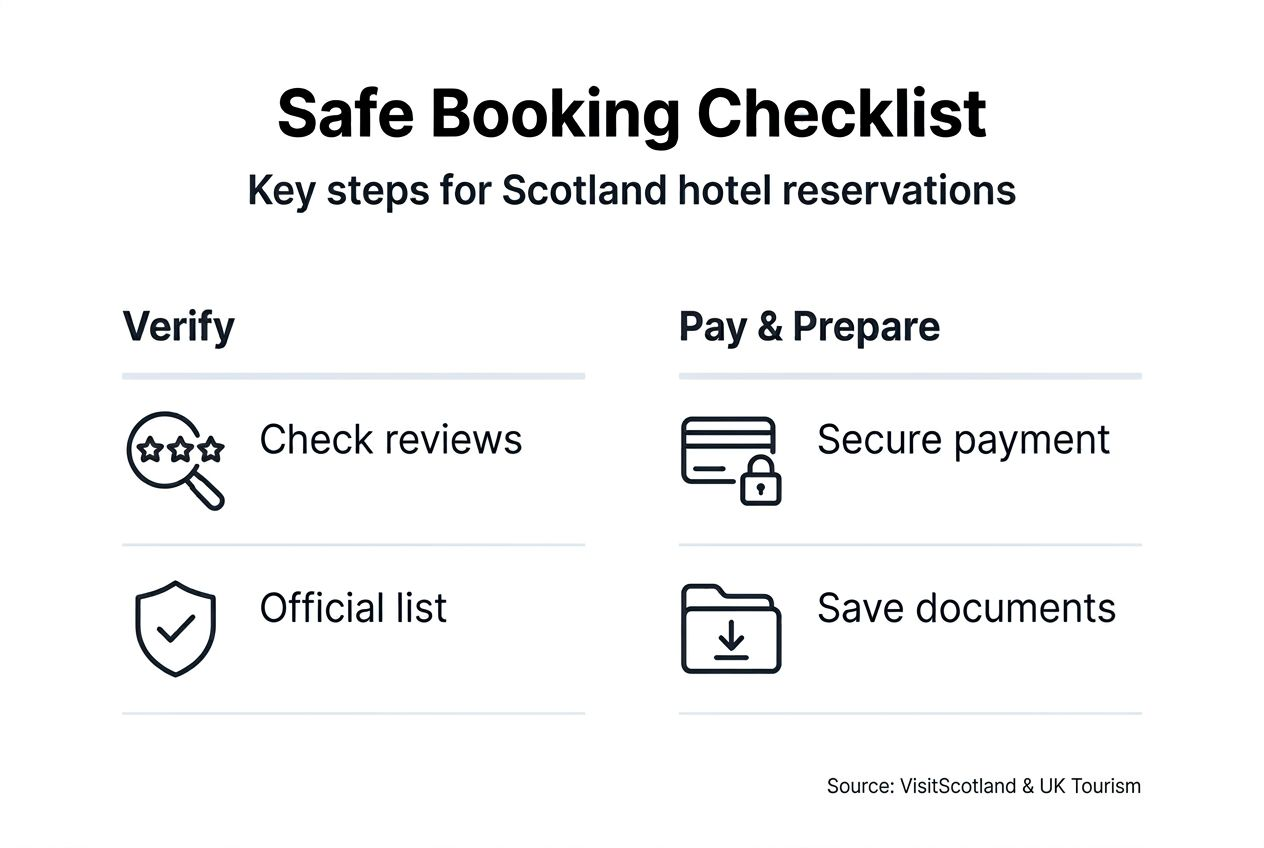
Step 1: research and verify hotel authenticity
Verifying a hotel’s legitimacy protects you from advance payment scams and phantom properties that exist only online. Verification through VisitScotland and official accreditation reduces booking scams significantly, giving you confidence in your accommodation choice.
Start by checking if the property appears on VisitScotland’s official database. This government-backed tourism organisation maintains current records of legitimate Scottish accommodation providers. Look for recognised quality assurance schemes like VisitScotland’s Quality Assurance or AA star ratings that indicate inspected properties meeting specific standards.
Cross-reference the hotel’s physical address using map services. Legitimate establishments have verifiable locations with street view imagery showing actual buildings. Check multiple contact methods exist, including a working phone number and official email address using the hotel’s domain name.
Research checklist:
Verify listing on VisitScotland or recognised accommodation directories
Confirm current quality assurance certifications and star ratings
Check physical address exists on map services with visible property
Test contact details by calling or emailing with a booking question
Review recent guest satisfaction scores on multiple platforms
Verification resource | Reliability | What it confirms |
VisitScotland official database | Very high | Property registration and location |
Quality assurance schemes | High | Standards compliance and inspection status |
Multiple booking platforms | Medium to high | Consistent property details and reviews |
Direct hotel website | High | Official contact information and rates |
Social media presence | Medium | Recent activity and guest interaction |
Unverified listing sites | Low | Often incomplete or outdated information |
Pay attention to guest review patterns analysed through hotel review analysis techniques. Authentic reviews show varied writing styles and mention specific details. Fake reviews often use generic language and appear in clusters. Properties with hundreds of five-star reviews posted within days raise red flags.
Thorough verification takes 15 minutes but prevents costly mistakes. This upfront investment protects your travel budget and ensures your Scottish accommodation actually exists when you arrive.
Step 2: choose trusted booking platforms or direct bookings
Your booking channel choice directly impacts your protection against fraud and overbooking. Booking via major platforms lowers fraud risk, while direct booking reduces overbooking incidents by 40%, making channel selection a crucial safety decision.
Major online travel agencies offer built-in fraud protection, verified property listings, and customer support infrastructure. These platforms invest heavily in security measures and typically compensate guests if booked properties don’t meet advertised standards. You also benefit from aggregated reviews spanning years and multiple guest experiences.
Direct hotel bookings through official property websites often provide better rate flexibility and direct communication with accommodation staff. You eliminate the middleman, reducing miscommunication risks about special requests or arrival times. Many independent Scottish guest houses offer exclusive direct booking discounts and more personalised service.
Platform security checklist:
Confirm website uses HTTPS encryption throughout booking process
Verify platform displays PCI DSS compliance certification
Check customer service contact options include phone and email
Look for physical company address and registration details
Read platform’s booking guarantee and dispute resolution policies
Booking method | Fraud protection | Price flexibility | Customer service | Overbooking risk |
Major OTA platforms | Excellent | Moderate | Standardised | Low to moderate |
Direct hotel website | Good | High | Personalised | Very low |
Third-party aggregators | Variable | Low | Limited | Moderate to high |
Social media direct contact | Minimal | High | Direct | Low |
Pro Tip: For high-value bookings or group reservations, combine research on major platforms with final booking directly through the hotel’s official website. This approach gives you review insights whilst securing better rates and direct communication.

Whichever channel you choose, verify security indicators before entering payment details. The padlock symbol in your browser’s address bar confirms encrypted communication. Avoid platforms requesting unusual payment methods like wire transfers or cryptocurrency for standard bookings. These represent significant red flags.
Explore additional essential booking tips to refine your platform selection strategy based on your specific travel needs and risk tolerance.
Step 3: confirm booking details and use secure payment methods
Payment security represents your strongest defence against financial fraud during hotel bookings. Avoiding public networks during payment reduces credit card data theft chances by 90%, making your payment environment critical.
Verify every detail in your booking summary before submitting payment. Check dates, room type, number of guests, and total cost including taxes and fees. Mismatched information causes disputes and potential double bookings. Take screenshots of your booking summary page as backup documentation.
Use only PCI DSS compliant payment gateways that encrypt your card details during transmission. Major payment processors display security badges and certification information on checkout pages. Credit cards offer better fraud protection than debit cards, with easier dispute resolution and temporary charge reversal options.
Secure payment process:
Connect to your private, password-protected home network
Verify website URL matches the official domain exactly
Confirm HTTPS padlock symbol appears in address bar
Use credit card rather than debit for enhanced protection
Save confirmation email and booking reference immediately
Check bank statement within 24 hours for correct charge amount
Enable transaction alerts on your payment card for real-time monitoring
“Payment data theft drops dramatically when consumers avoid public WiFi and unsecured networks during online transactions. Using verified, encrypted connections for hotel bookings creates multiple security layers that protect both payment details and personal information.”
Never enter payment details whilst connected to public WiFi networks in cafes, airports, or hotels. These networks lack encryption and allow cybercriminals to intercept transmitted data easily. If you must book whilst travelling, use your mobile phone’s data connection through a password-protected personal hotspot.
Confirmation emails should arrive within minutes of booking completion. These contain your booking reference number, property contact details, and full reservation information. If confirmation doesn’t arrive promptly, contact the booking platform or hotel immediately to verify your reservation was processed correctly.
Understanding privacy and payment security principles helps you identify secure booking environments and avoid unnecessary risks throughout the reservation process.
Step 4: review cancellation policies and prepare for arrival
Cancellation terms directly impact your financial exposure if travel plans change. Understanding these policies before booking helps you choose options that match your flexibility needs whilst avoiding unexpected penalties.
Scottish hotels typically offer several cancellation policy tiers. Flexible rates allow free cancellation until 24 to 48 hours before arrival but cost more upfront. Non-refundable rates provide discounts but forfeit your payment if you cancel. Some properties offer partial refunds on a sliding scale based on cancellation timing.
Read the full policy details, not just the highlighted summary. Note the cancellation deadline, refund percentage, and how modifications differ from complete cancellations. Some hotels allow date changes without penalty whilst charging for cancellations. Others treat any alteration as a cancellation triggering fees.
Key policy considerations:
Exact cancellation deadline including time zone
Refund method and processing timeframe
Fees charged for modifications versus cancellations
Force majeure provisions for emergencies
Group booking cancellation terms
UK legal requirements mandate valid identification at check-in, so prepare documentation before departure. Acceptable forms include passports, driving licences with photo, or national identity cards for European Economic Area residents. Hotels must verify guest identity for safety and legal compliance.
Keep digital and physical copies of your booking confirmation, payment receipt, and identification documents. Store these in easily accessible locations like your phone’s email app and a dedicated travel document folder. This redundancy prevents check-in delays if you lose primary copies.
Arrange arrival notification if you expect to reach the property outside standard check-in hours. Many Scottish guest houses operate with limited reception hours, particularly smaller independent properties. Confirming your late arrival ensures staff availability or secure key collection arrangements.
Familiarise yourself with hotel booking terms to understand your rights and responsibilities throughout the booking lifecycle and stay period.
Common mistakes and how to avoid them
Even experienced travellers make booking errors that compromise their safety and satisfaction. Recognising these common pitfalls helps you avoid repeating them.
Skipping hotel verification leads directly to scams and phantom bookings. Fraudsters create convincing fake websites that collect payments for non-existent properties. Always verify through official channels rather than trusting a single impressive website or too-good-to-be-true pricing.
Ignoring payment security exposes you to financial theft with lasting consequences. Using public WiFi or unsecured websites during booking gives criminals access to your card details. These stolen credentials often surface months later in unrelated fraudulent transactions.
Failing to save booking confirmations causes reservation disputes and check-in delays. Hotels receive hundreds of bookings weekly, and verbal claims without reference numbers prove difficult to verify. Screenshots and email confirmations serve as essential proof.
Overlooking cancellation policy details leads to unexpected financial penalties. Assuming all bookings offer free cancellation results in costly surprises when plans change. Read policies completely before committing to any reservation.
Mistake prevention checklist:
Never skip verification steps even for urgent bookings
Always use secure, private networks for payment entry
Save confirmation emails and booking references immediately
Read complete cancellation policies, not just summaries
Verify booking details match your travel dates exactly
Contact properties directly if any information seems inconsistent
Pro Tip: Set calendar reminders for cancellation deadlines when booking flexible rates. This ensures you don’t miss free cancellation windows if your plans become uncertain.
Rushing through the booking process increases error probability. Taking an extra ten minutes to verify details, check policies, and save documentation prevents problems worth hundreds of pounds. The small upfront time investment protects both your money and travel experience.
Learn from others’ experiences through guides on hotel booking mistakes to avoid that compile real traveller challenges and solutions.
Expected outcomes and success metrics
Following systematic safe booking practices delivers measurable improvements in your accommodation security and satisfaction. Understanding these benchmarks helps you evaluate whether you’re applying the guidance effectively.
Travellers who verify hotels through official sources experience over 60% fewer booking scams compared to those who skip verification steps. This dramatic reduction represents hundreds of pounds saved and eliminated travel disruption. Verification takes minimal time whilst providing maximum protection.
Guests staying at verified, quality-assured Scottish properties report 90% satisfaction rates with their accommodation. These high scores reflect consistent standards, accurate advertising, and professional service delivery that inspected properties maintain. Your booking confidence increases when you know properties meet verified quality benchmarks.
Using secure payment methods and private networks when booking reduces payment fraud risk by 75%. This protection extends beyond the immediate booking, as stolen payment details often enable future fraudulent transactions. Secure booking practices safeguard your financial information long term.
Understanding and selecting appropriate cancellation policies increases penalty-free cancellation success rates by 80%. Travellers who match policy flexibility to their trip certainty avoid unexpected charges when circumstances change. This knowledge particularly benefits those booking well in advance or during uncertain periods.
Success metric | Improvement rate | Benefit |
Booking scam avoidance | 60% reduction | Financial protection and trip security |
Guest satisfaction in verified hotels | 90% positive | Quality assurance and met expectations |
Payment fraud prevention | 75% reduction | Financial security and data protection |
Penalty-free cancellations | 80% success | Flexibility and avoided fees |
Check-in issues resolved | 85% faster | Smooth arrival with proper documentation |
These outcomes demonstrate that safe booking practices deliver concrete benefits beyond abstract security concepts. You protect your money, ensure quality accommodation, and gain flexibility that enhances your entire Scottish travel experience. The systematic approach transforms booking from a potential minefield into a confident, secure process.
Discover secure and comfortable guest houses in Elgin
Applying safe booking principles becomes simpler when you start with verified, trustworthy accommodation providers. Stag & Barrel offers secure guest house options in Elgin that meet rigorous quality standards whilst providing personalised Scottish hospitality.
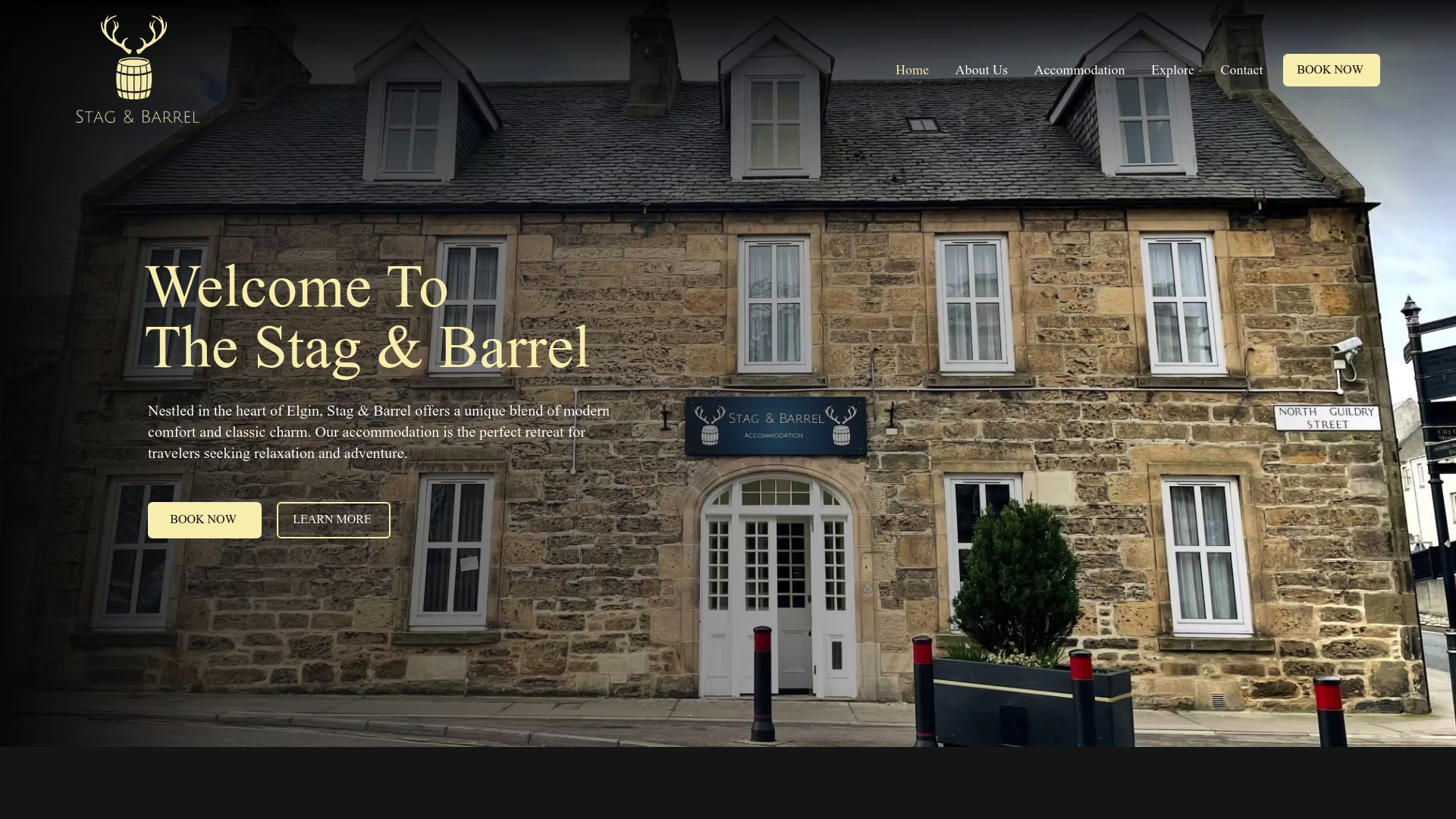
Our guest houses combine affordability with the verification and security measures this guide emphasises. You’ll find transparent pricing, flexible booking policies, and direct communication that eliminates common booking risks. Whether you’re visiting for business or exploring Scotland’s stunning landscapes, our properties provide the secure, comfortable base you need.
Explore our comprehensive guest house booking guide for detailed information about amenities, locations, and booking processes. Learn how to book hotel in Elgin through our straightforward reservation system that prioritises your security and satisfaction.
Frequently asked questions
What is the safest way to verify a hotel in Scotland before booking?
Check the property on VisitScotland’s official database and confirm quality assurance certifications from recognised schemes. Verify the physical address exists on map services, test contact details, and review recent guest feedback across multiple platforms. This multi-source verification significantly reduces fraud risk.
Should I book through a platform or directly with the hotel?
Both options offer advantages depending on your priorities. Major platforms provide fraud protection and verified reviews, whilst direct booking often secures better rates and personalised service. For maximum security, research on platforms but complete booking through the hotel’s official website when possible.
How can I tell if a booking website is secure for payment?
Look for HTTPS in the web address with a padlock symbol in your browser. Verify the site displays PCI DSS compliance certification and uses recognised payment processors. Avoid sites requesting unusual payment methods or displaying spelling errors and unprofessional design that suggest fraudulent operations.
What identification do I need for hotel check-in in Scotland?
UK hotels legally require valid photo identification at check-in. Acceptable documents include passports, photo driving licences, or national identity cards for EEA residents. Keep both digital and physical copies accessible to prevent delays. Some properties may request additional address verification for security purposes.
When should I contact the hotel directly about my booking?
Contact the property if confirmation doesn’t arrive within an hour of booking, if you plan to arrive outside standard check-in hours, or if booking details appear incorrect. Direct communication resolves issues faster than platform intermediaries and confirms your reservation exists in the hotel’s system.
What happens if I need to cancel my Scottish hotel booking?
Your outcome depends entirely on the cancellation policy you agreed to when booking. Flexible rates typically allow free cancellation until 24 to 48 hours before arrival. Non-refundable bookings forfeit payment regardless of cancellation timing. Always review specific policy terms and note the exact deadline before committing to any reservation.
Recommended


Comments