Guest House Trends 2026 – What Matters Now
- Meet Patel
- Jan 16
- 8 min read

Updated: May 15

A bold wave of change is sweeping through british hospitality, with over 60 percent of travel planners in Elgin reporting that guest expectations are rising faster than ever before. This matters as modern guest houses must adapt to shifting preferences, from smarter technology to meaningful sustainability efforts. By exploring the latest trends in personalised service and eco-conscious design, you gain insight into how guest houses in Scotland are shaping memorable experiences for 2026.
Table of Contents
Key Takeaways
Point | Details |
Emphasis on Personalisation | Modern guest houses are leveraging AI to provide tailored experiences, integrating mobile check-ins and voice control as standard. |
Focus on Sustainability | Accommodations are required to demonstrate ecological responsibility, incorporating energy efficiency and local sourcing into their operations. |
Emerging Accommodation Models | Innovative guest house concepts, such as wellness-integrated and hybrid workspace models, are redefining traveller expectations and operational strategies. |
Legal and Compliance Challenges | Guest house operators must navigate evolving legal standards regarding data protection and environmental compliance to ensure operational viability. |
Defining modern guest house trends
Modern guest house trends are experiencing a transformative evolution, driven by technological innovation and changing guest expectations. The hospitality landscape is shifting dramatically, with a clear emphasis on creating more personalised, efficient, and sustainable experiences. Hospitality insights reveal that the convergence of technology, sustainability, and human-centred leadership is reshaping how guest houses operate and engage with travellers.
At the core of these emerging trends are several key developments. Digital transformation is enabling unprecedented levels of personalisation, with AI-driven technologies allowing guest houses to anticipate and meet individual preferences. Mobile check-in processes, voice-controlled room features, and smart technology integration are no longer luxury additions but expected standard services. Guest houses that can seamlessly blend technological convenience with genuine human warmth will distinguish themselves in an increasingly competitive market.
Sustainability has also become a critical factor in defining modern guest house experiences. Travellers are increasingly seeking accommodations that demonstrate ecological responsibility, from energy-efficient operations to locally sourced amenities. Smart technology trends are not just about convenience, but also about reducing environmental impact. This means implementing systems that minimise waste, reduce energy consumption, and support local ecological initiatives.
Pro tip: Consider investing in modular, adaptable technologies that can evolve with changing guest preferences and sustainable practices.
Types and models emerging in 2026
The guest house landscape in 2026 is witnessing a remarkable transformation, with innovative accommodation models challenging traditional hospitality paradigms. Emerging hospitality models are redefining guest experiences through hybrid spaces that seamlessly blend residential comfort with sophisticated service offerings. These new approaches reflect a profound shift in traveller expectations, prioritising flexibility, personalisation, and authentic interactions.
Key emerging models include boutique lifestyle guest houses that offer deeply personalised experiences. These establishments move beyond standard lodging, creating immersive environments that reflect local culture, design aesthetics, and unique narratives. Wellness-integrated guest houses are particularly notable, incorporating holistic health amenities, sustainable practices, and spaces designed to support mental and physical rejuvenation. Technology-driven accommodation models are also gaining prominence, with smart rooms that adapt to individual preferences and provide seamless digital interactions.

The boundaries between work and leisure are dissolving, giving rise to hybrid accommodation concepts. These guest houses feature flexible workspaces, high-speed connectivity, and environments that support both professional productivity and leisure relaxation. Some models are experimenting with modular room designs that can be reconfigured based on guest needs, from solo traveller configurations to family-friendly layouts. This adaptability represents a significant departure from the one-size-fits-all approach of traditional guest accommodation.
Pro tip: Invest in versatile infrastructure that can quickly adapt to changing guest preferences and technological innovations.
The following table compares major emerging guest house models for 2026:
Model Type | Core Focus | Typical Amenities | Unique Value |
Boutique lifestyle | Personalisation, design | Curated decor, local art | Strong sense of place |
Wellness-integrated | Holistic health, wellness | Yoga rooms, healthy menus | Enhanced guest well-being |
Technology-driven | Smart automation | Adaptive smart rooms | Seamless digital experience |
Hybrid workspace | Productivity and leisure | Collaborative zones, WiFi | Work-travel flexibility |
Technology and personalisation in guest houses
AI-driven personalisation strategies are revolutionising guest house experiences in 2026, transforming how accommodation providers interact with and anticipate guest needs. Technology is no longer just a supplementary feature but a core element of service delivery, enabling unprecedented levels of tailored interaction. Modern guest houses are leveraging sophisticated data analytics and artificial intelligence to create highly customised journeys that feel intuitive and seamless.
The core of this technological evolution lies in predictive service models. Advanced systems now analyse guest preferences in real-time, allowing guest houses to anticipate requirements before guests even articulate them. This might involve automatically adjusting room temperatures, recommending personalised dining options, or providing localised entertainment suggestions based on individual guest profiles. Mobile engagement technologies are particularly transformative, enabling guests to control virtually every aspect of their stay through intelligent mobile interfaces.
Crucially, these technological innovations are designed to enhance rather than replace human interaction. The most successful guest houses are those that use AI and data analytics to create more meaningful connections, not to depersonalise service. Intelligent systems can now provide staff with contextual insights, allowing them to deliver more empathetic and targeted support. For instance, a guest house might use technology to remember a guest’s dietary preferences, past stay experiences, or special occasions, enabling staff to provide genuinely personalised touches.
Pro tip: Invest in flexible AI technologies that can learn and adapt to individual guest preferences while maintaining a human-centric service approach.
Here is a summary of how technology is shaping the future of guest houses in 2026:
Technology Trend | Example Application | Impact on Guest Experience |
AI-driven personalisation | Predictive guest services | Bespoke and anticipatory care |
Mobile engagement | Smart check-in via app | Convenience and autonomy |
Voice-controlled features | Room environment management | Enhanced comfort and control |
Data analytics platforms | Informed staff interactions | More thoughtful service |
Sustainability and wellness shaping guest stays
Regenerative hospitality approaches are transforming guest house experiences, moving far beyond traditional sustainability concepts. In 2026, guests are seeking accommodations that actively contribute to environmental and social well-being, rather than simply minimising negative impacts. This holistic approach integrates ecological responsibility with guest wellness, creating spaces that nurture both individuals and the surrounding ecosystem.
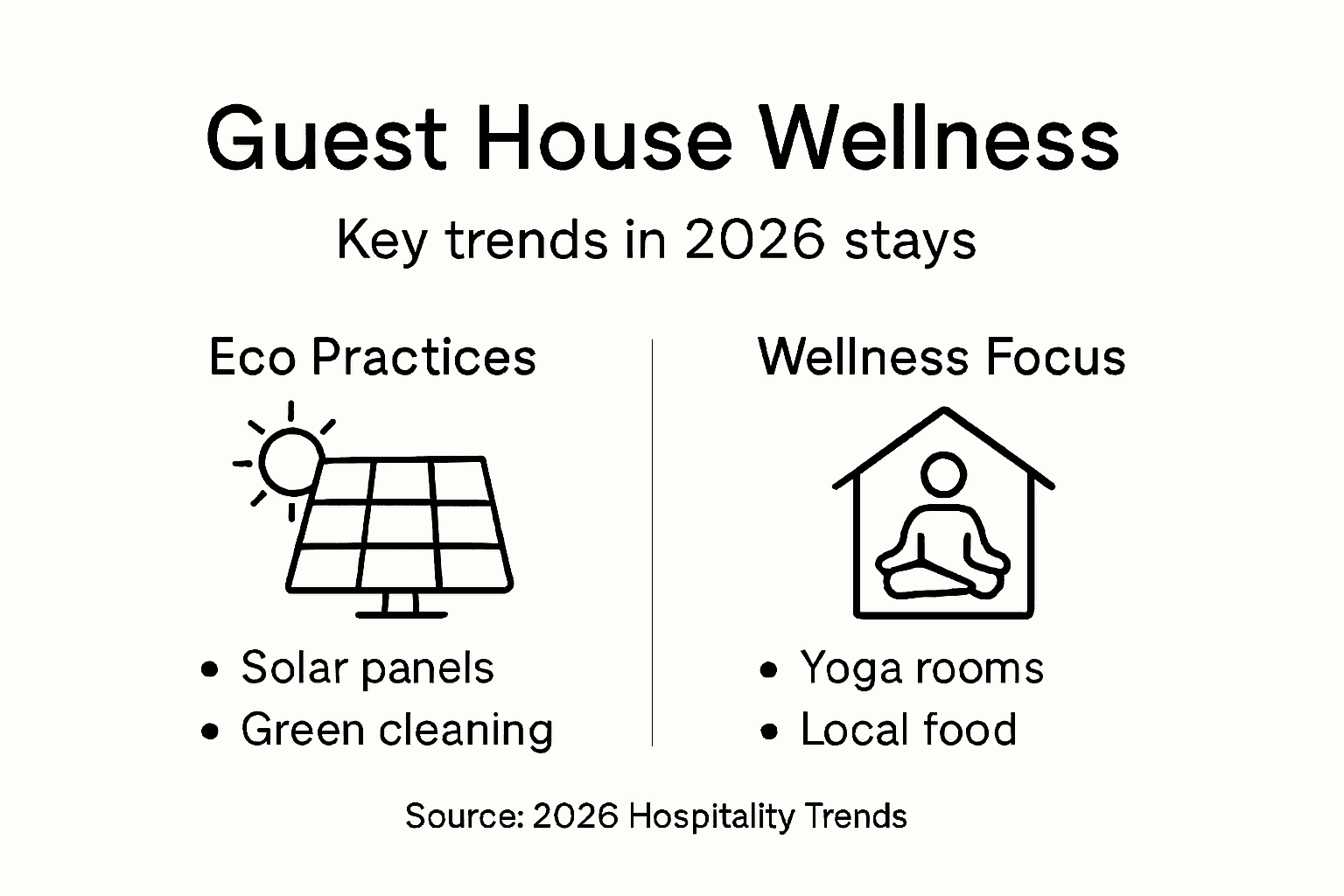
Wellness has become a fundamental expectation rather than a luxury add-on. Guest houses are designing comprehensive wellness experiences that encompass physical, mental, and environmental health. This might include locally sourced organic meals, on-site yoga and meditation spaces, natural materials in room design, and programming that connects guests with local ecological restoration projects. Sustainable hospitality practices now extend to every aspect of operations, from energy-efficient infrastructure to water conservation strategies and waste reduction programmes.
The most innovative guest houses are reimagining sustainability as a collaborative journey with guests. Interactive programmes allow travellers to participate in conservation efforts, understand local ecological challenges, and directly contribute to community well-being. This approach transforms sustainability from a passive concept to an engaging, educational experience that empowers guests to become active environmental stewards. By creating meaningful connections between personal wellness, local ecosystems, and global environmental challenges, these guest houses are redefining hospitality for a more conscious generation of travellers.
Pro tip: Develop sustainability initiatives that offer guests tangible, interactive ways to contribute to local environmental and social projects.
Legal changes and compliance for hosts
Legal frameworks for hospitality are experiencing unprecedented transformation in 2026, presenting complex challenges for guest house operators. Regulatory landscapes are becoming increasingly sophisticated, requiring hosts to maintain rigorous compliance across multiple dimensions. These emerging legal requirements span critical areas including guest safety, data privacy, employment practices, and environmental stewardship.
The most significant shifts involve data protection and privacy regulations. Hosts must now implement robust systems that protect guest information with GDPR-level stringency, ensuring transparent data handling practices and securing explicit consent for information usage. Compliance trends in hospitality indicate that regulatory frameworks are becoming more harmonised across different jurisdictions, demanding proactive legal monitoring and sophisticated operational adaptability.
Environmental compliance has also emerged as a critical legal consideration. Guest houses are now required to demonstrate measurable sustainability practices, with potential legal implications for failing to meet evolving ecological standards. This includes comprehensive reporting on energy consumption, waste management, and carbon footprint reduction. Hosts must develop sophisticated tracking mechanisms and be prepared to provide transparent documentation of their environmental performance.
Pro tip: Invest in comprehensive legal compliance software that can automatically update and track changing regulatory requirements across different jurisdictions.
Financial and operational implications for owners
AI-driven revenue management is fundamentally transforming the financial landscape for guest house owners in 2026. Traditional operational models are being replaced by dynamic, data-informed strategies that demand significant technological investment and strategic adaptability. Owners must now view technology not as an optional upgrade, but as a critical infrastructure essential for maintaining competitive advantage and operational efficiency.
Operational workflows are experiencing radical restructuring, driven by predictive technologies and guest-centric service models. Hospitality operational strategies now prioritise integrated systems that can simultaneously manage revenue, personalise guest experiences, and optimise resource allocation. This means investing in sophisticated software platforms capable of real-time data analysis, automated maintenance scheduling, and intelligent pricing mechanisms that respond dynamically to market conditions.
Financial sustainability now requires a holistic approach that balances technological investment with potential revenue streams. Guest houses must develop nuanced strategies that leverage direct booking technologies, implement loyalty programmes, and create multiple revenue channels beyond traditional room rentals. This might include offering specialised experiences, partnering with local tourism initiatives, or developing ancillary service offerings that enhance guest value while creating additional income opportunities.
Pro tip: Develop a comprehensive technology investment roadmap that aligns digital infrastructure with projected revenue growth and operational efficiency targets.
Elevate Your Guest House Experience with Smart Solutions from Stag and Barrel
Modern guest house operators face complex challenges in 2026 ranging from embracing AI-driven personalisation to meeting strict sustainability and legal compliance standards. The demand for technology that anticipates guest needs while preserving genuine human connection is greater than ever. At the same time, operational efficiency and innovative revenue management require adaptable and integrated systems designed specifically for today’s dynamic hospitality environment.
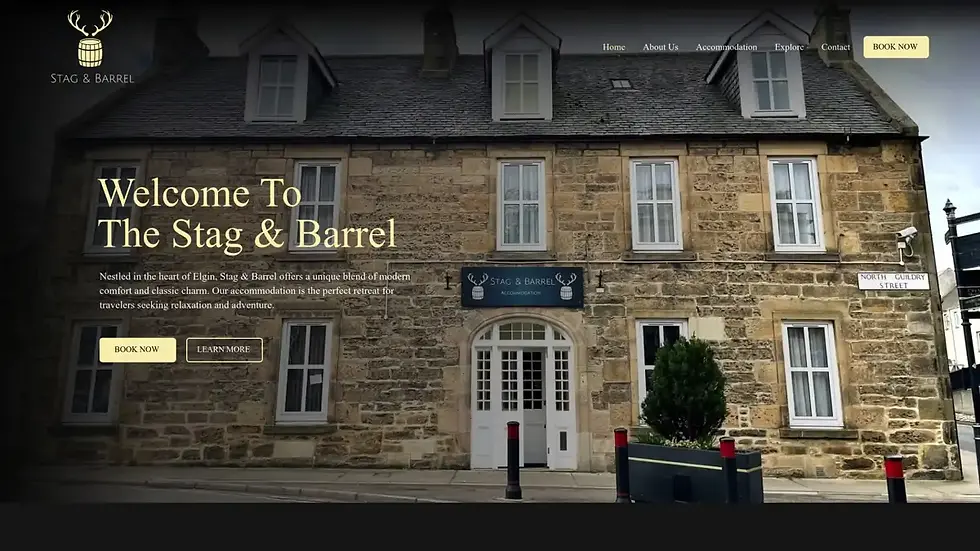
Discover how our bespoke Hotel Guest House solutions empower you to stay ahead of the curve with scalable technology and expert support. Whether you aim to incorporate smart automation, enhance personalised guest interactions, or streamline your compliance efforts, visit Stag and Barrel now to transform your guest house into a seamless, future-ready hospitality destination. Act today to ensure your business thrives amid evolving guest expectations and industry trends.
Frequently Asked Questions
What are the key trends in guest houses for 2026?
The key trends include personalised guest experiences driven by AI, a focus on sustainability, and the emergence of hybrid accommodation models that blend residential comfort with workspaces.
How is technology affecting guest house experiences?
Technology enables greater personalisation through AI-driven services, mobile engagement, and smart room features, enhancing convenience while still fostering human connections.
What sustainability practices are guest houses adopting in 2026?
Guest houses are implementing regenerative hospitality approaches, which encompass ecological responsibility, wellness offerings, and engaging guests in sustainability initiatives, such as local restoration projects.
What legal considerations should guest house operators be aware of in 2026?
Operators must navigate evolving legal frameworks concerning data privacy, guest safety, and environmental compliance, ensuring rigorous adherence to regulations and sustainable practices.
Recommended


Comments